

A female hair transplant in Turkey moves your own hair from the dense donor area at the back and sides of the head to a widening parting, a thinning front or a high hairline. It works best for pattern hair loss with a stable donor area, and it is not the answer for thinning across the whole scalp. At BlueMagic Group Clinic in Istanbul, grafts for women are usually placed with the DHI pen, often without shaving the treated area, and packages start from €3,400. The best clinic for you is the one that tells you honestly, before you travel, whether a transplant suits your hair loss at all.
Did you know? Women rarely lose all their hair the way men can. Hair loss in women is more often a thinning parting or overall thinning, which is why a hair transplant for women needs a careful plan: the doctors restore density where it shows without taking too much from the donor area.
BlueMagic Group Clinic, co-founded by our CEO Pasquale Minasi, has worked in Istanbul for 12 years and has carried out more than 35,000 procedures for patients from over 120 countries. Every plan for a woman starts from her photos, her hair loss pattern and the way she wears her hair.
Below we explain what is different for women and who a transplant suits. Then we cover how to compare clinics in Turkey, the day itself, the honest risks and the cost. For the treatment page itself, see hair transplant for women in Istanbul.
Female hair transplant in Turkey at a glance
| Question | Answer |
|---|---|
| Where | Our two clinics in Istanbul, in Bakırköy and Küçükçekmece |
| Who it suits | Pattern hair loss, a high or receding hairline, thinning from tight hairstyles or around scars, with a stable donor area |
| Who it does not suit | Diffuse thinning that also affects the donor area, hair loss that is still changing quickly, an active scalp condition |
| Technique | Usually DHI, with grafts placed between your existing hair |
| Shaving | The treated area can often stay unshaven |
| Anaesthesia | Local: you are awake and can take breaks |
| Procedure | 6 to 8 hours, depending on the number of grafts |
| Stay | 3 nights for one session, 4 nights for two |
| Result | New hair from about month 3, the final result at 12 to 18 months |
| Packages | From €3,400, your exact price in writing within 24 hours |
How is a hair transplant for women different from a man’s?
The principle is the same for everyone: grafts are taken one by one from the donor area at the back and sides of the head and placed where the hair has thinned. Each graft is your own hair, so it keeps growing and you can cut, colour and style it like the rest. Four things make the plan different for women.
The pattern of hair loss
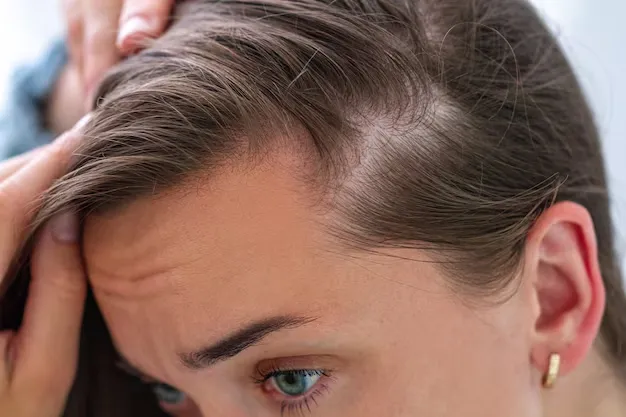
Men usually lose hair at the hairline and the crown. Women more often see a widening parting or thinning on top while the hairline stays in place. Grafts have to be spread evenly between the hair you still have, so the new hair blends in and the result looks like more of your own hair, not a new hairline.
The donor area
In some women the back and sides thin as well. If the donor area is not stable, there is not enough healthy hair to move, and taking grafts would only thin it further. That is why the doctors judge your donor area from your photos before anything else.
Hairline design
A woman’s hairline is softer and rounder than a man’s, often with fine hairs at the front and gentle temples. When the hairline is treated, it is drawn to suit your face and agreed with you in front of the mirror on the day.
Can a hair transplant for women be done without shaving?
Often, yes. Many women want a procedure that nobody notices, so grafts are placed with the DHI implanter pen between your existing hair, and the treated area can often stay unshaven. Only a small part of the donor area is trimmed where longer hair covers it. Read more in our guide to DHI without shaving.
When is a hair transplant not the answer for a woman?
Some hair loss in women can be reversed, so a transplant is not always the first step. A good clinic says so before you book.
- Find the cause first. The NHS advises seeing a GP about hair loss before going to a commercial clinic, because temporary hair loss from stress, illness, weight loss or a lack of iron usually grows back once the cause is treated. A transplant cannot fix a cause that is still active. (NHS, hair loss, read 14 Nov 2026)
- Thinning over the whole scalp. If the back and sides are thinning too, there is no stable donor area. We tell you this from your photos and do not offer a transplant that is unlikely to work.
- Hair loss that is still changing quickly. The doctors want to see a stable pattern, so the new hair still fits your hair in the years ahead.
- An active scalp condition. It needs treatment first; the plan can be looked at again afterwards.
Why is DHI often the first choice for women?
With DHI, each graft is loaded into an implanter pen, often called the Choi pen, and placed straight into the scalp. For women it has three practical advantages:
- Precision: close control over the angle, depth and direction of each hair, which matters along a parting and a soft hairline.
- Placement between existing hair: grafts go in among the hair you already have, which suits thinning rather than bald areas.
- Often no shaving of the treated area: you can keep your hairstyle and return to daily life with less to hide.
DHI is not automatically better for everyone. For a larger area, Sapphire FUE may suit your plan better, and the doctors explain which technique they recommend and why in your written plan.
In this clinic video, a patient talks about her hair transplant for thin hair at the front, and her consultation shows how the team plans what to shave and what to leave so the donor area can be hidden afterwards.
Who is a good candidate for a female hair transplant?
A transplant usually suits you if you:
- have pattern hair loss: a widening parting, thinning at the front or crown, or a receding hairline
- were born with a high forehead or high temples and want a lower, softer hairline
- have hair loss from tight hairstyles (traction alopecia) where the follicles are no longer active
- have thinning around scars from an accident, a burn or earlier cosmetic surgery
- have a stable, dense donor area and realistic expectations
One woman in our videos came for exactly this reason. She says her high forehead and temples were there from birth, and that over the years “it started to bother me in a psychological way”. After her procedure she was frank: the day was “a little bit exhausting”, and still “I actually have zero complaints”.
Traction alopecia and diffuse thinning: when does surgery help?
Traction alopecia is hair loss caused by hair being pulled tight for a long time, for example by tight braids, extensions or a tight ponytail. It often shows along the hairline and at the temples. Diffuse thinning is a loss of density spread over the top of the head, and in some women over the back and sides as well.
A transplant can help traction alopecia once the follicles in the thin area are no longer active and the donor area at the back of your head is still dense. With diffuse thinning the deciding question is the same. If the back and sides are thinning too, there is no stable donor hair to move, and a transplant is not the right answer.
In both cases the medical cause comes first. A GP or a specialist can look at your scalp and check your bloods, as the NHS advises before you go to a commercial clinic (NHS, hair loss). Once the cause is known and your hair loss is stable, the doctors can judge from your photos whether a transplant would help.
How do you choose the best clinic for a female hair transplant in Turkey?
There is no single best clinic for every woman. The best one for you answers your questions in writing and is willing to say no. Use this checklist when you compare clinics, including ours. Our guide on how to choose a hair transplant clinic in Turkey goes into more detail.
| What to ask | Why it matters for women | What a good answer looks like |
|---|---|---|
| Is a transplant right for my hair loss? | Diffuse thinning and unstable hair loss often do not suit a transplant | A clear yes or no from your photos, with the reason |
| How strong is my donor area? | The donor area is often less dense in women | An assessment before you book, not on the day |
| Which technique, and why? | Partings and hairlines need fine control | The technique named in your plan, with the reason |
| Do I have to shave? | Most women want a discreet procedure | What is trimmed and what stays, agreed in advance |
| How many grafts, and how many sessions? | Unshaven work means fewer grafts per session | A graft estimate and session plan in writing |
| What is in the price? | Hidden extras are a common worry abroad | A written price with hotel, transfers and aftercare listed |
| What happens after I fly home? | Shedding in weeks 2 to 8 can feel worrying | Follow-ups and a team you can reach for months |
Red flags: a price before anyone has seen your photos, a promise that every woman is a candidate, a fixed number of grafts for everyone, or no written plan.
What happens on the day of a female hair transplant?
A procedure usually takes 6 to 8 hours, depending on the number of grafts. You are awake under local anaesthesia and can take breaks.
- Consultation and design: final checks, then your parting or hairline is drawn and agreed with you, including what is trimmed and what stays.
- Local anaesthesia: the donor and recipient areas are numbed, so the treated areas are numb while the team works.
- Extraction: grafts are taken one by one from the back and sides of your head.
- Implantation: each graft is placed with the DHI pen at the angle and direction of your natural hair.
- Aftercare: you leave with written instructions and rest at your hotel. The team shows you your first wash before you fly home.
Not every hour is comfortable, and patients say so. The patient in the first video said “you have to be ready because it’s a little bit painful”, and that the staff were very friendly.
How many grafts do women usually need?
There is no fixed number. It depends on the size of the area you want to treat, how dense your own hair still is there and how many grafts your donor area can safely give. The doctors set your graft estimate in your free written plan, which you get within 24 hours of sending your photos.
A clinic that quotes the same number of grafts for every woman before seeing your photos is showing one of the red flags above.
Aftercare and recovery: what to do in the first weeks
Immediate aftercare
Follow the instructions you are given exactly. Sleep with your head raised on your back for the first nights, take the medicines as prescribed, and wash your hair the way the team shows you with the prescribed products. Small crusts form around the grafts and lift away between days 7 and 14.
What to avoid while you heal
No swimming or strenuous exercise during the healing period, no alcohol or smoking, nothing that thins the blood, and protect your head from direct sun with a loose cap. Most people return to normal routines once the crusts have gone.
| When | What happens |
|---|---|
| Day 1 | Grafts in place. Small crusts form. You sleep with your head raised. |
| First days | Your first wash, shown to you by the team. |
| Days 7 to 14 | Crusts lift away and most people return to normal routines. |
| Weeks 2 to 8 | Normal shedding. Most transplanted hairs fall out; the follicles stay and rest. |
| Months 3 to 6 | Fine new hairs from about month 3. Many people see a clear change by month 6. |
| Months 12 to 18 | Most of the result shows at 12 months; the final result is assessed at 12 to 18 months. |
In another of our videos, a woman speaks the day after her procedure, just after her wash. She says “all the staff cares about their patients” and that they were “on time very professional”.
What are the risks of a hair transplant for women?
A hair transplant under local anaesthesia is a well-established procedure, but no medical procedure is free of risk, and no clinic can guarantee a result. Possible effects include temporary swelling, numbness, itching and inflamed hair follicles, and rarely infection or lower graft survival. Shedding in weeks 2 to 8 is normal but can feel worrying. Smoking and some medicines reduce graft survival, so your plan tells you what to pause and when.
Two limits matter more for women. Donor hair is finite and often less dense, and an unshaven procedure means fewer grafts per session, so a large area may need a second session later. We would rather decline a procedure than accept a patient whose donor area or health makes a good result unlikely.
How much does a female hair transplant cost in Turkey?
Women and men book the same three packages, with the same care in each. Your technique, sessions and final price are confirmed in your free written plan after the medical team reviews your photos.
| Package | From | Sessions | Hotel |
|---|---|---|---|
| Sapphire FUE | €3,400 | One session | 3 nights |
| DHI | €3,600 | One session | 3 nights |
| 2× DHI | €4,600 | Two sessions on two consecutive days | 4 nights |
Every package includes the medical consultation, the hair transplant, a personal translator, a 5-star hotel with breakfast, private transfers, lunch at the clinic on your procedure day, PRP treatment for the grafts (included free, worth €600), a 12-month aftercare programme with 6 follow-ups and flexible dates. Flights are not included. These are starting prices: your plan can be higher depending on the grafts you need, your donor area and the technique. Our hair transplant cost guide for Turkey explains what changes the price.
Restore your hair and your confidence with BlueMagic Group Clinic
A hair transplant for women can restore density where it shows when the hair loss and the donor area are right for it. When they are not, we tell you so in your written plan, before you book anything.
If you are considering it, send a few photos to BlueMagic Group Clinic. You get a free written plan within 24 hours that says whether a transplant suits you, the technique, the graft estimate and your price, with no obligation. You can also look at women’s hair transplant before and after results first.
Female hair transplant in Turkey: frequently asked questions
How long does a women’s hair transplant take?
The procedure takes 6 to 8 hours, depending on the number of grafts. You stay 3 nights for one session or 4 nights for two, and crusts lift away between days 7 and 14.
Will my hair look thinner while it grows?
For a while, it can. Most transplanted hairs shed in weeks 2 to 8, which is expected. Fine new hairs appear from about month 3, many people see a clear change by month 6, and the final result is assessed at 12 to 18 months.
Can a hair transplant for women look natural?
It can, when the grafts follow the angle and direction of your own hair and the parting or hairline is designed for your face. Results vary from person to person, and no clinic can promise a specific outcome.
Is a hair transplant permanent for women?
Transplanted hair comes from the donor area and usually keeps growing like it. Your other hair can still thin with age, which is why the doctors check that your hair loss is stable first.
Do I have to shave my head?
Usually not. Grafts are often placed between your existing hair with the DHI pen, and only a small part of the donor area is trimmed where longer hair covers it.
Can a hair transplant help after the menopause?
It can improve hair loss after the menopause when the donor area is still healthy. The doctors first look at whether your hair loss is stable.
This article is general information and does not replace a medical consultation. Your plan is based on your own photos and health history.


