

A hair graft is a tiny piece of skin taken from the donor area at the back and sides of your head, holding a natural group of one, two or three hairs. In a hair transplant, grafts are moved one by one to the thinning or bald areas, where they are expected to keep growing. That is why clinics count a hair transplant in grafts, not in hairs: the number of grafts you need depends on the size of the area, the density you want and how many grafts your donor area can safely give.
| Term | What it means |
|---|---|
| Graft | A small unit of skin with its own group of hairs, moved from the donor area to the area being treated |
| Hairs per graft | Usually one, two or three, so a graft count is not a hair count |
| Donor area | The back and sides of the head, where the hair is resistant to pattern hair loss |
| Graft count | How many grafts a plan moves, for example 2,000, 3,000 or two sessions of up to 6,000 to 7,000 in total |
A hair transplant procedure is one of the ways to restore hair, and it works through grafts. Below, our team at BlueMagic Group Clinic in Istanbul explains what grafts are, the types, how they survive, how many you may need, and the honest limits.
Understanding Hair Grafts
Patients hear the word “graft” from the first message to the last day of aftercare. In medicine, a graft is a piece of living tissue taken from one part of the body and moved to another. In a hair transplant, a hair graft is a piece of tissue taken from the back of the scalp, the donor area.
A graft and a hair are not the same thing. One graft can hold one hair or a small group of hairs, so two patients with the same number of grafts can end up with a different number of hairs. The number of hairs in each graft plays a big part in the density and coverage you see at the end.
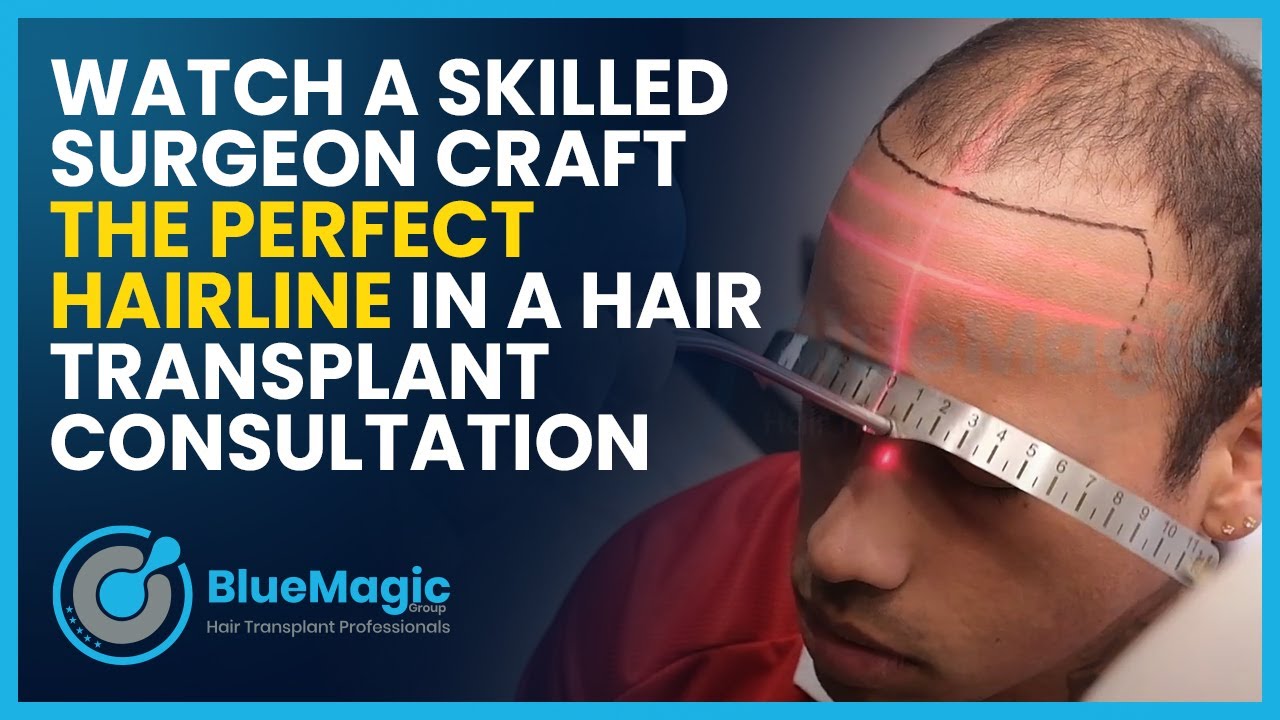
In the video below, our team walks through a hair transplant step by step, from taking the grafts to placing them.
Types
Grafts are sorted by how many hairs they hold. Each type has its own job in the plan.
1. Single-Hair Grafts
A single-hair graft holds one hair. These grafts are used to create a natural-looking hairline, because a real hairline starts with fine single hairs. They are placed one by one, following the natural direction and spacing of your hair, often in a soft zigzag line rather than a straight one.
2. Multi-Hair Grafts
Multi-hair grafts hold two or three hairs within a single graft. They are used where you need more coverage, such as behind the hairline, on the mid-scalp or on the crown. Taking them out without damaging the hairs inside takes precision and care, which is why extraction is slow, careful work.


Their Impact on Results
The mix of grafts plays a big part in the final look. At BlueMagic Group Clinic, the team chooses the best grafts from the donor area and places them by type: single-hair grafts at the front for softness, and grafts with several hairs further back for density.
- Front line: single-hair grafts, for a soft, natural edge
- Behind the hairline and mid-scalp: two-hair and three-hair grafts, for density
- Crown: grafts with several hairs, placed to follow the swirl of your hair
This way, the hairline looks natural up close, while the areas behind it look fuller.
Grafts vs Hairs: How Many Hairs Do You Get?
Because each graft holds one to three hairs, a graft count only tells you part of the story. As simple arithmetic, 3,000 grafts can hold anywhere from 3,000 to about 9,000 hairs. Where you land depends on your own donor hair, which no clinic can change.
| Plan size | What it usually suits | Read more |
|---|---|---|
| About 2,000 grafts | A receding hairline or one smaller area | 2,000 grafts guide |
| About 3,000 grafts | The hairline and the area behind it | 3,000 grafts guide |
| About 4,000 grafts | The front and mid-scalp | 4,000 grafts guide |
| About 5,000 grafts | The front, mid-scalp and part of the crown | 5,000 grafts guide |
| 6,000 grafts or more | Large areas, usually in two sessions | 6,000 grafts guide |
These are rough guides, not a promise. The same number of grafts can be planned as dense cover on a small area or lighter cover on a large one. To compare prices, see hair transplant cost per graft.
How to Maximize Hair Graft Survival?
Graft survival depends on careful work in the operating room and on your aftercare in the first days.

What you can do yourself in the first days after surgery:
- Do not scratch or rub the treated area.
- Follow the washing routine the team shows you, starting with a gentle foam wash.
- Sleep and rest as advised, and avoid knocks to the head.
- Read the full after hair transplant guide.
One patient in our videos described coming back to the clinic for the first wash:
“…Today we came back. We did the shampoo, took the bandages off, and I’m good to go.”
A patient in the BlueMagic Group Clinic video How Online Reviews Helped This Patient Avoid the Wrong Hair Transplant Clinic
How to Determine the Number of Hair Grafts Needed for a Hair Transplant?
The number of grafts you need depends on how far your hair loss has gone, the density you want and what your donor area can give. A qualified team works this out in a consultation, from photos or in person.
1. Evaluating the Donor Area
The donor area is the source of every graft, and how many grafts it can give differs a lot from person to person. In one consultation filmed at our clinic, the doctor estimated that a patient’s donor area could give about 2,500 to 3,000 grafts without damage. Other patients, with a dense donor area, can go far higher, and our 8,000 grafts guide explains when very large numbers are and are not realistic.
The video shows how the team reads one patient’s donor area and decides where the grafts go first.
2. Transplanting Multiple Sessions
When more grafts are needed than is safe in one go, the plan is split into two sessions. This allows a higher total while keeping the donor area in good condition. At BlueMagic Group Clinic, the 2× DHI plan uses two sessions on two consecutive days, up to 6,000 to 7,000 grafts.
I talked with them, and they explained that I have a very high density donor area, that we can actually take a lot of grafts from there. And then we end up doing a two-day procedure.
A patient in the BlueMagic Group Clinic video Amazing Hair Transformation: 6500 Grafts in Just 2 Days using DHI Method
Honest Risks and Limits of Hair Grafts
A hair transplant moves hair. It does not create new hair, and that sets a few honest limits:
- The donor area is finite. Taking too many grafts can leave the back of the head thin. A good plan protects it, even if that means fewer grafts.
- Not every graft will grow. Handling, your healing and aftercare all play a part, and no clinic can promise that every graft survives.
- Hair loss can go on. Your own hair around the grafts can keep thinning, so some patients later consider a second session.
- Results take time. Transplanted hairs usually shed in the first weeks, and new growth usually starts between one and four months after the procedure, gaining density over the following months.
- More grafts is not always better. A number that sounds high means little without the right placement and a donor area that can carry it.
The Importance of Surgeon Skill and Experience
The success of a hair transplant depends not only on the hair transplant techniques and how the grafts are handled, but also on the skill and experience of the team. A skilled team takes grafts with as little damage to the follicles as possible and places them at the right angle.
When you choose a clinic, look at the experience of the whole surgical team and how much time they give each procedure. At BlueMagic Group Clinic, a procedure usually takes 6 to 8 hours, so every graft can be handled with care.
BlueMagic Group Clinic, led by CEO and co-founder Pasquale Minasi, has worked in Istanbul for 12 years:
- 35,000+ procedures, for patients from 120+ countries
- 4.6 on Trustpilot from 1,475 reviews
- Sapphire FUE from €3,400 and DHI from €3,600, one session with 3 hotel nights; 2× DHI from €4,600, two sessions with 4 hotel nights
- PRP included free with every hair transplant package, worth €600
- a 12-month aftercare programme with 6 follow-ups
See all packages, the hair transplant cost in Turkey and how to choose the best hair transplant clinic in Turkey.
Frequently Asked Questions
What is a hair graft?
A small piece of skin from the donor area at the back and sides of the head, holding a natural group of usually one, two or three hairs. It is moved to a thinning or bald area, where it is expected to keep growing.
Is a graft the same as a hair?
No. One graft can hold one hair or a small group of hairs, so 2,000 grafts usually means more than 2,000 hairs. That is why graft counts and hair counts are not the same.
How many grafts do I need?
It depends on the size of the area, the density you want and your donor area. A receding hairline may need around 2,000 grafts, while large areas often need two sessions. A consultation gives you a personal number.
Do transplanted grafts last?
The hair in the grafts comes from the donor area, which is resistant to pattern hair loss, so it is expected to stay. Your own hair around it can still thin over time.
Why do grafts fall out after a few weeks?
Shedding of the transplanted hairs in the first weeks is normal. The root stays in place, and new hair usually starts to grow between one and four months later.
Conclusion
Hair grafts decide the density, coverage and look of a hair transplant. Knowing what a graft is, how many hairs it holds and how your donor area limits the total helps you judge any plan you are offered.
At BlueMagic Group Clinic we plan every graft around your donor area and handle each one with care. The choice of clinic and surgeon makes a real difference to how well grafts survive, and so to a natural-looking result. You can also get your free hair transplant plan by sending photos of your hair.
Last updated: November 2026.
This article is general information and does not replace a medical consultation. Your plan is based on your own photos and health history.


