
A Choi implanter pen is the pen-shaped instrument used in DHI (Direct Hair Implantation). It has a fine hollow needle with a plunger behind it: a graft is loaded into the needle, and the surgeon places it straight into the scalp in one movement, choosing the angle, direction and depth at that moment, with no separate step for opening channels. At BlueMagic Group Clinic in Istanbul, the Choi pen is the tool behind every DHI hair transplant in Turkey, a package that starts from €3,600.
This page explains how the pen works, what it does better and where its limits are, who it suits, what it costs and what to expect on the day. Last updated: November 2026.

| At a glance | Choi pen (DHI) |
|---|---|
| What it is | A pen-shaped implanter with a hollow needle and a plunger |
| What it does | Places each graft directly, with no separate channel step |
| Main strength | Control of angle, direction and depth, graft by graft |
| Main limits | Takes more time and needs a very experienced team; not ideal for very large sessions |
| Shaving | Shaved, or unshaven DHI, which BlueMagic Group Clinic offers in Istanbul |
| Price at BlueMagic Group Clinic | DHI from €3,600; 2× DHI (two sessions on two consecutive days) from €4,600 |
What Is a Choi Implanter Pen? Understanding the Technology
Most hair transplants have two stages: grafts are taken from the donor area at the back and sides of the head, and then they are placed in the thinning area. In FUE, the surgeon first opens small channels in the thinning area and then puts the grafts into them. The Choi pen joins the second stage into one movement: the needle makes the opening and places the graft at the same time.
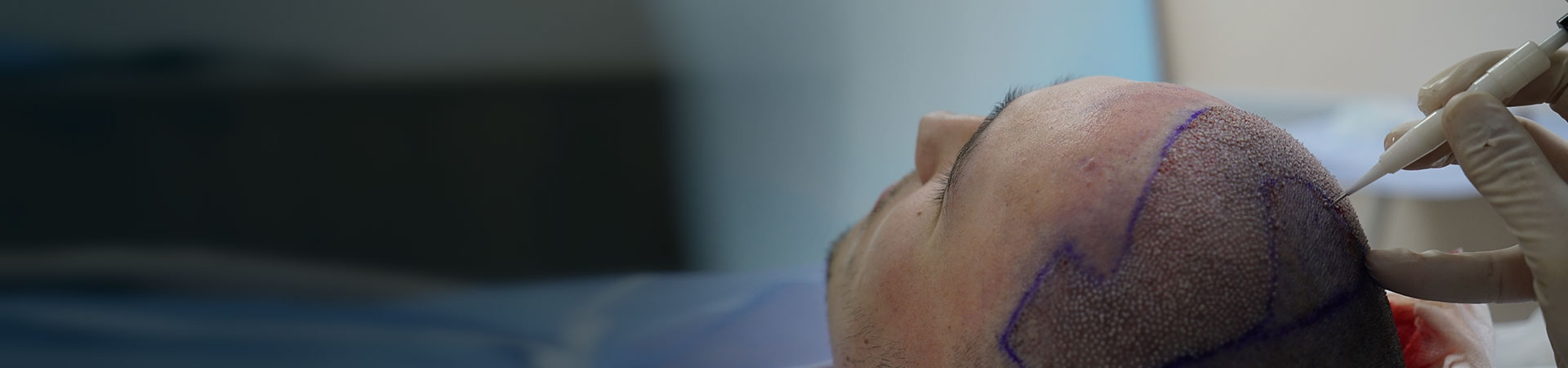
With DHI, each graft is placed directly into the scalp using an implant pen. This allows the surgeon to control angle, direction, depth at the exact moment of implantation. There is no separate step for opening channels.
From our clinic video “What is DHI?”
The Anatomy of a Choi Implanter Pen
A Choi pen is simple to describe. Its parts are:
- A hollow needle at the tip, which holds one graft and makes the opening in the scalp. Needles come in different sizes, so the team can match the size of the grafts.
- A plunger behind the needle, which pushes the graft out of the needle and into the scalp.
- A pen-shaped body, held like a pen, which gives the surgeon fine control at the hairline.
How the DHI Choi Pen Works: Step-by-Step Mechanism
- Loading: a graft taken from the donor area is loaded into the hollow needle.
- Positioning: the surgeon holds the pen at the angle and direction the new hair should grow.
- Implanting: the needle enters the scalp and the plunger releases the graft in the same movement.
- Repeating: the steps are repeated graft by graft. Several pens are loaded in turn so the work keeps moving.
Why Was the Choi Pen Invented?
The pen carries the name of the doctor who designed it. The idea was to place grafts with better control of angle and depth than placing them by hand into channels made earlier. Today pens of this type are used in many countries and on every hair type, and the name “Choi pen” is often used for all DHI implanter pens.
The Science Behind DHI Choi Pen Hair Transplant Success
We do not quote exact survival rates, minutes outside the body, blood flow or shock loss percentages for the Choi pen, because we could not find a reliable source for those figures. What can be said honestly is what the pen changes in the way grafts are placed:
- Angle and direction: each graft is placed at the angle chosen for that spot, which matters most at the hairline, where a natural look depends on it.
- Depth: the needle and plunger help the team place grafts at a steady depth.
- Between existing hair: the fine needle lets the team add grafts among the hair you still have, which suits thinning rather than fully bald areas.
- One step instead of two: there is no separate stage of opening channels before the grafts go in.
What the pen does not change: the number of grafts you can have depends on your donor area, and the result depends on the experience of the team, the plan and how well you follow the aftercare. No tool can create hair where the donor area cannot supply it.
Advantages of the Choi Implanter Pen in DHI Hair Transplant
The pen is not better for everyone, but it has clear strengths in the right case:
| Advantage | Why it matters | Who it helps most |
|---|---|---|
| No channels opened in advance | Opening and placing happen in one movement | Any DHI patient |
| Fine control of angle and direction | The hairline can follow natural growth patterns | Hairline design, temples |
| Placement between existing hair | Grafts can go among the hair you still have | Thinning areas, women with diffuse thinning, second procedures |
| Unshaven option | The recipient area can stay unshaven | People who want a more discreet procedure |
Unshaven DHI Hair Transplant Capability
Because the needle is fine, DHI can be done without shaving the hair in the thinning area. BlueMagic Group Clinic offers unshaven DHI in Istanbul. It has limits: it takes longer, and it is not suited to every case or every number of grafts. Read more on partial shaven DHI and DHI without shaving.
Healing and Recovery
Healing after DHI follows the same timeline as other hair transplants. Small crusts form around the grafts and fall off between day 7 and day 14; up to two weeks is normal (how long scabs take to heal). Some redness and swelling in the first days is common. We do not promise faster healing or less pain with exact percentages, because healing depends on the person and the size of the session.

Higher Graft Survival Rates: What We Can and Cannot Promise
No honest clinic can promise a fixed survival percentage for every patient, and we do not quote one. Graft survival depends on careful handling, the plan, your health and your aftercare. Our hair transplant guarantee covers the operated areas: if the follicles do not regrow after 12 to 18 months, you come back with your certificate for an evaluation. It requires following the aftercare plan and sending photos when asked.
Choi Implanter Pen vs. Traditional Hair Transplant Tools
Grafts can be placed in a few ways. The table compares them in plain terms, without percentages we cannot source:
| Method | How grafts go in | Strengths | Limits |
|---|---|---|---|
| Choi pen (DHI) | The pen opens and places in one movement | Fine control of angle, depth and direction; works between existing hair | Slower; needs a very experienced team; not ideal for very large sessions |
| Channels and forceps (FUE) | Channels are opened first, then grafts are placed with fine forceps | Efficient for larger areas in one session | Two steps; precision depends on how the channels are made |
| Sapphire FUE | Channels are opened with sapphire blades, then grafts are placed | Dense, even coverage of larger areas | Usually shaved; channel step first |
| Lateral slits or stick-and-place | Small slits or needle openings, then grafts placed by hand | Used by some clinics for density | Two steps; graft handling by hand |
At BlueMagic Group Clinic we offer DHI and Sapphire FUE. Our doctor in Istanbul does the incisions and the extractions, supported by technicians. Our medical team chooses the technique with you, from photos of your hair loss and donor area. For the full comparison, see DHI vs FUE.
DHI is not better or worse. It’s more precise, and precision only works in the right hands for the right case. That’s how it should be understood.
From our clinic video “What is DHI?”
Choi Pen vs. DHI Implanter Pen
Many people ask whether a “Choi pen” and a “DHI pen” are the same thing. In everyday use, yes: “Choi pen” is the original name, and “DHI implanter pen” is the general name for pens that work the same way. What matters for your result is less the brand of the pen and more the team using it and the plan behind it.
The DHI Choi Pen Procedure: What to Expect
A one-session DHI package at BlueMagic Group Clinic includes 3 nights in a 5-star hotel with breakfast, private transfers between the airport, hotel and clinic, a personal translator and lunch at the clinic on the day. The day itself usually looks like this:
- Consultation and planning: your hairline and graft plan are agreed with you, and your medical history is checked.
- Preparation: photos, hairline marking, and local anaesthesia of the donor and recipient areas. You stay awake.
- Extraction: the doctor takes the grafts one by one from the donor area.
- Implantation with the Choi pen: grafts are loaded into the pens and placed at the planned angle and depth.
- After the procedure: PRP treatment for the grafts, worth €600, is included free, and you receive written care instructions.
The whole procedure usually takes 6 to 8 hours. Your first hair wash is usually the day after surgery.

How to prepare in the weeks before
Good preparation helps the day go smoothly. In our clinic video on preparing for a hair transplant, the team gives this advice:
- Tell the medical team about every medicine you take, and ask your doctor about stopping aspirin at least five days before surgery.
- Avoid heavy smoking and drinking a lot of alcohol before surgery, because both affect blood circulation.
- Check your scalp for skin conditions such as eczema and tell the team, because an active scalp problem should be treated first.
- Eat less spicy and salty food in the days before the procedure.
- Plan to rest at your hotel after surgery and only go out lightly from the third day, to avoid sweating.
Planning the grafts
In one of our clinic videos, the team explains a DHI plan for a large recipient area: about 60 percent of the planned grafts go to the front and middle, and about 40 percent to the crown, with a soft zigzag hairline for a natural look. Every plan is different and depends on your donor area.
How the hairline is drawn before the pen is used
The pen places what the plan draws, so the drawing comes first. In our consultation videos the team explains how a hairline is planned:
- The hairline is designed with you, following your face shape, age and hair genetics, so it looks natural rather than copied.
- The front line is drawn as a soft zigzag, not a flat line, with even spacing between the marks.
- Single-hair grafts go at the very front for softness; grafts with several hairs go further back.
- The line is kept above the forehead muscles, because grafts placed on those muscles do not settle or grow.
- Density is placed more toward the front and eases toward the back, while the donor area is protected for the future.
- The team says it would refuse a request for a hairline that would look unnatural.
Recovery and Follow-Up
| When | What usually happens |
|---|---|
| First days | Redness and some swelling; small crusts form around the grafts |
| Day after surgery | Usually your first hair wash |
| Day 3 | Coffee is allowed again |
| Day 7 to 14 | Crusts fall off; up to two weeks is normal |
| From day 10 | Shampoo for 20 to 30 minutes, then about 3 minutes of gentle scab massage and a lukewarm rinse |
| First months | Transplanted hairs may shed (shock loss); this is part of the normal cycle |
| 12 to 18 months | The final result. If the follicles have not regrown by then, you come back with your certificate for an evaluation (see the guarantee above) |
Every package includes a 12-month aftercare programme with 6 follow-ups after you fly home. See also the DHI results timeline and whether DHI results are permanent.
Who Is the Ideal Candidate for Choi Pen Hair Transplant?
The Choi pen suits some cases better than others. We say it plainly in our “What is DHI?” video: using DHI everywhere is not always the smartest choice.
Often a good fit
- Hairline design and temples, where angle and direction matter most
- Thinning areas where you still have hair, including many women with diffuse thinning
- People who want an unshaven or more discreet procedure
- A second procedure to add density between existing hair
Possible, with a careful plan
- Very large bald areas: two sessions on two consecutive days (2× DHI, up to 6,000 to 7,000 grafts in one trip), or Sapphire FUE for larger areas, may suit better
- A weak or limited donor area: the plan must protect it for the future
- Very fine or very curly hair: the team chooses needle sizes and technique for your hair
Not a good fit yet
- An active scalp condition or infection, which should be treated first
- Expectations beyond what your donor area can give
- Not being ready to follow the aftercare plan
It usually takes more time. It requires a very experienced team, and it’s not ideal for very large sessions where speed and volume are required. Using DHI everywhere is not always the smartest choice.
From our clinic video “What is DHI?”
Honest risks and side effects
DHI with the Choi pen is surgery, and like any hair transplant it has side effects and risks. Most are short-lived, but you should know them before you book:
| Risk or side effect | What it means | What helps |
|---|---|---|
| Swelling and redness | Common in the first days after surgery | Swelling medication from the aftercare kit, taken for three days from the day after surgery, and sleeping on your back with the head raised |
| Infection | Possible after any surgery | Antibiotics from the aftercare kit start the day after surgery; wash exactly as the team shows you |
| Shock loss | About 15 to 20 days after the procedure, transplanted hairs start to fall out before new hair grows | Nothing to stop: it is part of the normal cycle |
| Sensitive scalp | The skin can stay more sensitive for about four months | Gentle washing with the products from your aftercare kit |
| An unnatural hairline | Happens when a line is drawn too low, too flat or too dense | A hairline designed with you, kept above the forehead muscles, with single-hair grafts at the front |
| An overused donor area | Taking too many grafts can leave the back of the head thin for good | A plan that protects the donor area; for very large needs, two sessions or Sapphire FUE |
| Grafts that do not grow as expected | Possible with any technique and any clinic | Following the aftercare plan; the guarantee covers the operated areas after 12 to 18 months |
If something worries you after you fly home, the 12-month aftercare programme with 6 follow-ups is there for exactly that.
Cost Considerations: Choi Pen vs. Standard Techniques
We do not give price examples in dollars or a “cost per surviving graft” calculation, because that would rest on survival rates we could not source. Below are our real package prices. All prices are starting prices (“from”): your exact price depends on your plan and is confirmed in writing before you travel. See hair transplant cost in Turkey and DHI hair transplant cost in Turkey.
| Package | From | Sessions | Hotel nights |
|---|---|---|---|
| Sapphire FUE | €3,400 | One session | 3 nights |
| DHI (Choi pen) | €3,600 | One session | 3 nights |
| 2× DHI | €4,600 | Two sessions on two consecutive days, up to 6,000 to 7,000 grafts | 4 nights |
Every package includes the medical consultation, the hair transplant, a 5-star hotel with breakfast, private transfers, a personal translator, lunch on the day, PRP worth €600 and the 12-month aftercare programme. VIP Diamond is an optional add-on. Compare all options on packages and services.
What does a Choi pen cost?
Some people search for the price of the pen itself. BlueMagic Group Clinic does not sell Choi pens, and you do not pay for the pen separately: it is part of the DHI package. The price difference between our DHI and Sapphire FUE starting prices is €200.
Is the Extra Cost Worth It?
It depends on your case. For a hairline, temples or thinning between existing hair, the control of the Choi pen is often worth it. For a large area that needs many grafts in one session, Sapphire FUE or two DHI sessions may give a better plan. Our medical team tells you which one fits, and why, before you book.

Questions to ask any clinic before you book DHI
Whichever clinic you choose, these questions show quickly how a DHI procedure will really be done:
- Who extracts the grafts and who places them? At BlueMagic Group Clinic in Istanbul, the doctor does the incisions and the extractions, supported by technicians.
- How many grafts are planned, and where will they go? Ask for the plan in writing.
- Will the area be shaved, partly shaved or left unshaven?
- What is the full price, and what does it include: hotel, transfers, translator, PRP and aftercare?
- What happens if the grafts do not grow? Ask to read the guarantee terms.
- Can you see real results of patients with hair like yours?
Common Questions About Choi Implanter Pen
Does the Choi pen hurt more than traditional methods?
The procedure is done under local anaesthesia, so you should feel pressure rather than pain once the area is numb. The injections themselves can sting for a short time. Some soreness, redness and swelling in the first days is common with any technique.
How long does a Choi pen procedure take?
A procedure usually takes 6 to 8 hours. DHI can take longer than FUE for the same number of grafts, because each graft is placed with the pen.
Can the Choi pen be used on all hair types?
Yes. Needles come in different sizes, and the team chooses them for your hair. For textured hair, see afro hair transplant techniques.

How many grafts can be implanted with the Choi pen?
As many as your donor area can safely give and your plan needs. At BlueMagic Group Clinic, our largest plan is 2× DHI: two sessions on two consecutive days, up to 6,000 to 7,000 grafts in one trip. Not everyone has a donor area for that many grafts.
Is special aftercare needed for Choi pen transplants?
The aftercare is the same as for other techniques: sleep and wash as instructed, do not touch or scratch the grafts, and follow the washing routine. Your first wash is usually the day after surgery, and the crusts fall off between day 7 and day 14.
Can I see before-and-after results of Choi pen procedures?
Yes. See our before and after results, or watch patients and the team on our YouTube channel. Results differ from person to person, and no result is guaranteed.
Conclusion: is the Choi pen right for you?
The Choi pen is a precise tool, and precision helps most at the hairline, at the temples and between existing hair. It is not the right answer for every case. BlueMagic Group Clinic has done more than 35,000 procedures for patients from more than 120 countries over 12 years in Istanbul, and is rated 4.6 on Trustpilot from 1,475 reviews (checked 29 Oct 2026).
Send us photos of your hair loss and your donor area, and our medical team will tell you:
- Whether DHI with the Choi pen or Sapphire FUE suits you, and why
- How many grafts you can safely have, and where they would go
- Your exact package price, in writing
Get your free hair transplant plan; you receive it within 24 hours. You can also read how to choose the best hair transplant clinic in Turkey, or contact BlueMagic Group Clinic with any question.
This page is general information, not medical advice. Your plan is decided by our medical team after a review of your case.
This article is general information and does not replace a medical consultation. Your plan is based on your own photos and health history.


